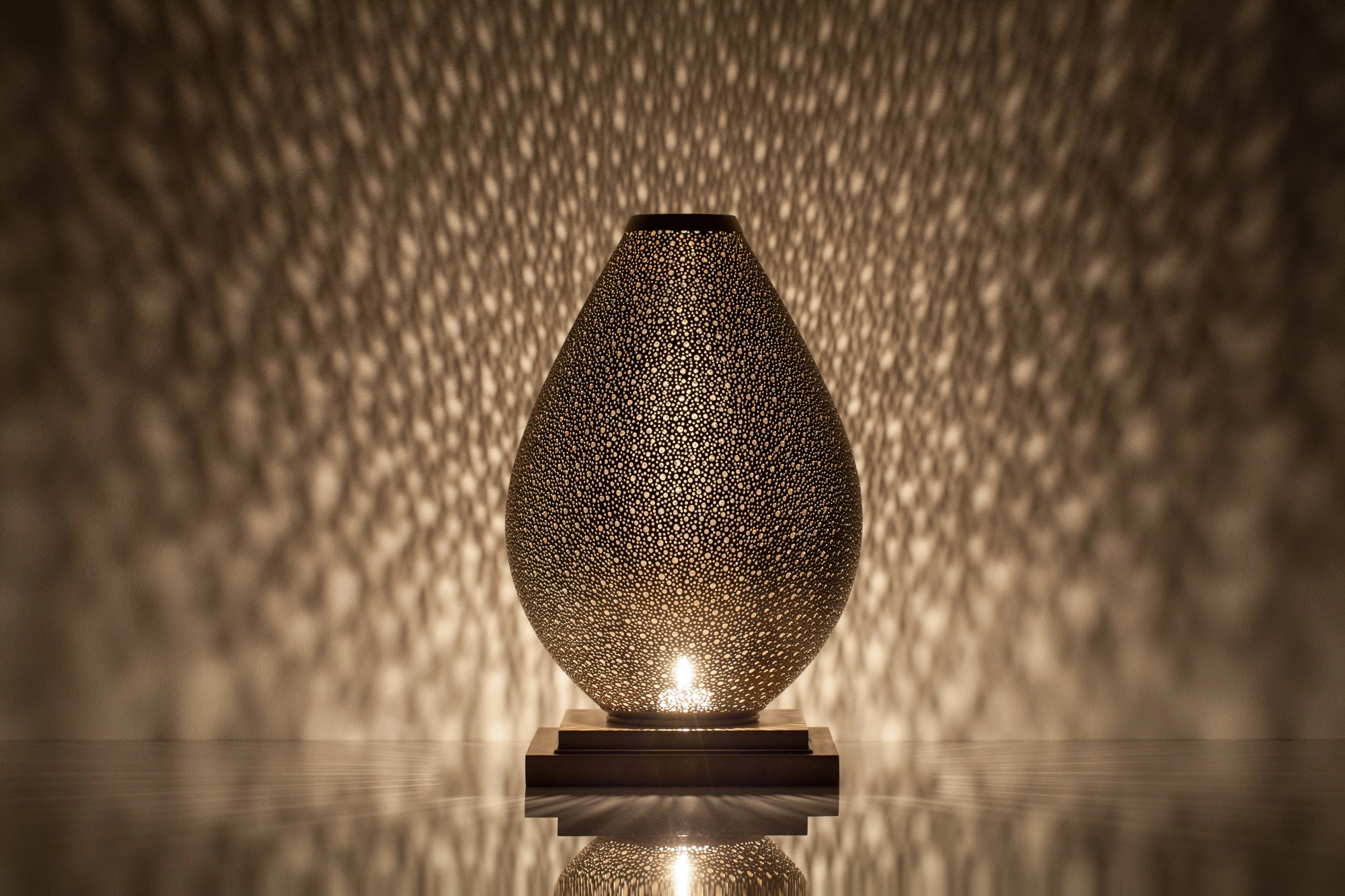
Candleholder - Amphora (Liquid Light)
Ref: CL-CH-A-HSL
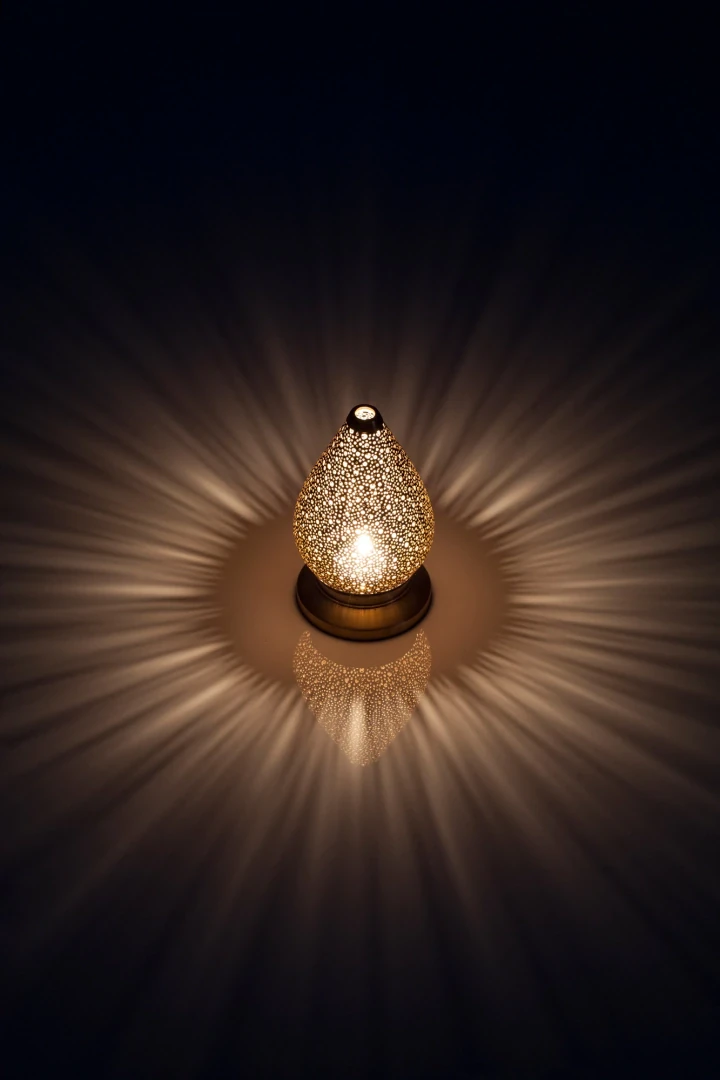
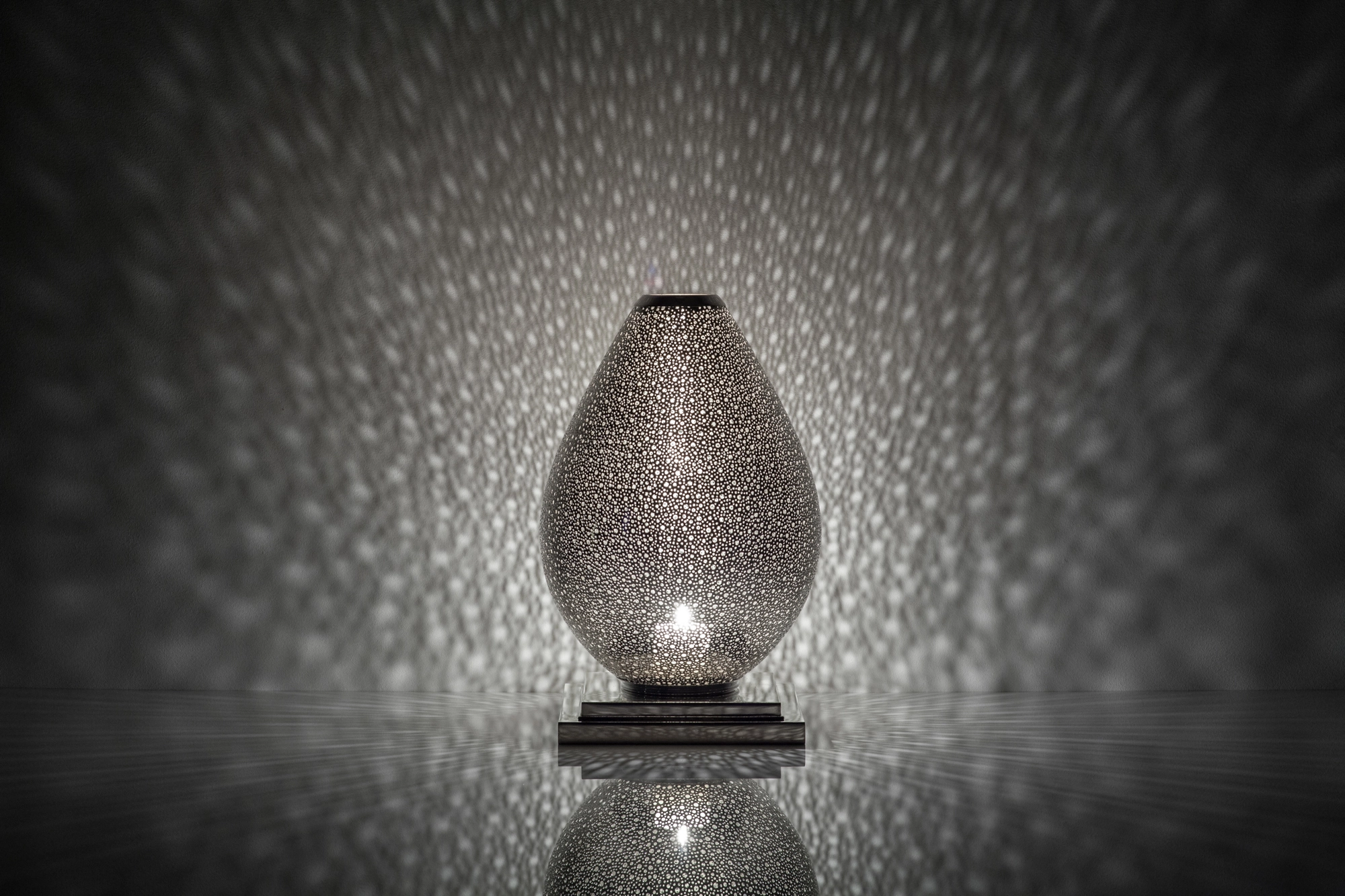
The Amphora Candle Holder is one of Yahya’s most iconic sculptural forms, developed as part of the original family of creations that would later become closely associated with the Yahya aesthetic and contemporary Moroccan decorative design. Inspired by the elegant proportions of ancient amphora vessels, the piece is composed from delicately assembled metal sections seamlessly joined to create a refined sculptural silhouette. The Amphora was later reinterpreted through Yahya’s signature abstract micro-perforation technique known as Liquid Light, creating a refined contemporary surface animated entirely by light and shadow.
In its larger sizes, the Amphora is raised upon a square sculptural base and can be used both as a candle holder and as an electrified sculptural lamp, allowing either natural flame or concealed lighting to illuminate the intricate openwork metalwork from within. Whether lit by candlelight or discreet integrated electrics, the piece projects delicate atmospheric patterns and shadows onto surrounding walls and surfaces, transforming light itself into a sculptural element. Both atmospheric and architectural, the Amphora Candle Holder remains a timeless expression of craftsmanship, sculptural light, and the enduring Yahya aesthetic.
Brass, Aged Bronze Finish.
Nickle Silver, Polished Finish.
140 x 140 x 240 (h) mm
175 x 175 x 300 (h) mm
210 x 210 x 360 (h) mm
AVAILABLE FOR CANDLE USE OR ELECTRIFIED.
(Uplit Only)
Originally conceived as candle holders, many Yahya pieces can also be electrified as sculptural lamps. Delivered fully assembled and ready out of the box, they require no installation and may be plugged in or supplied for hardwired installation. Each electrified piece includes an integrated inline switch/interrupter and can be supplied with UK, European, or US plugs and compatible drivers corresponding to the destination market.
The hand-sawn upper body is demountable for maintenance, while the LED and driver remain discreetly integrated within the base itself. Candle versions are supplied without candles and incorporate a removable internal candle plate allowing candles to be easily replaced and the interior cleaned.
Brass and aged bronze finishes are typically illuminated at 2700K for a warmer candle-like glow, while polished nickel silver versions are generally supplied at 3000K, better suited to the cooler reflective finish. All pieces are protected with a strong interior varnish, while exterior versions can be produced upon request using waterproofed electrical systems and specialist UV-resistant exterior-grade protective coatings.
Our brass pieces are hand-finished and aged to a rich bronze patination, then protected using a strong satin interior varnish designed to preserve the finish while maintaining the natural depth and warmth of the metal. For regular care, pieces should simply be dusted using a soft dry cloth without water or abrasive cleaning products. Over time, as with all living materials, the finish may naturally deepen and evolve in tone, developing an increasingly antique character that forms part of the beauty of aged bronze and brass.
Exterior pieces are protected using specialist UV-resistant varnishes developed for outdoor bronze sculptures and artworks. While these finishes offer substantial long-term protection, natural weathering and gradual patination remain an inherent characteristic of the material over extended periods. Should the varnish eventually soften or wear after many years, surfaces may be gently waxed and buffed in the traditional manner used for fine leather or bronze objects.
Polished nickel silver is not an electroplated finish but a solid material that may naturally soften slightly over time through handling and exposure. As with traditional silver objects, the surface can be restored using standard silver polishes widely available in hardware stores, or through traditional methods such as gentle lemon-based cleaning. Microfibre cloths are recommended for routine care, while abrasive materials and scratching should be avoided. Due to the entirely handmade nature of the work, subtle artisanal irregularities, variations, and traces of hand craftsmanship form an intentional part of the character and authenticity of each piece.