Pergola
Marrakech, Morocco (2014)
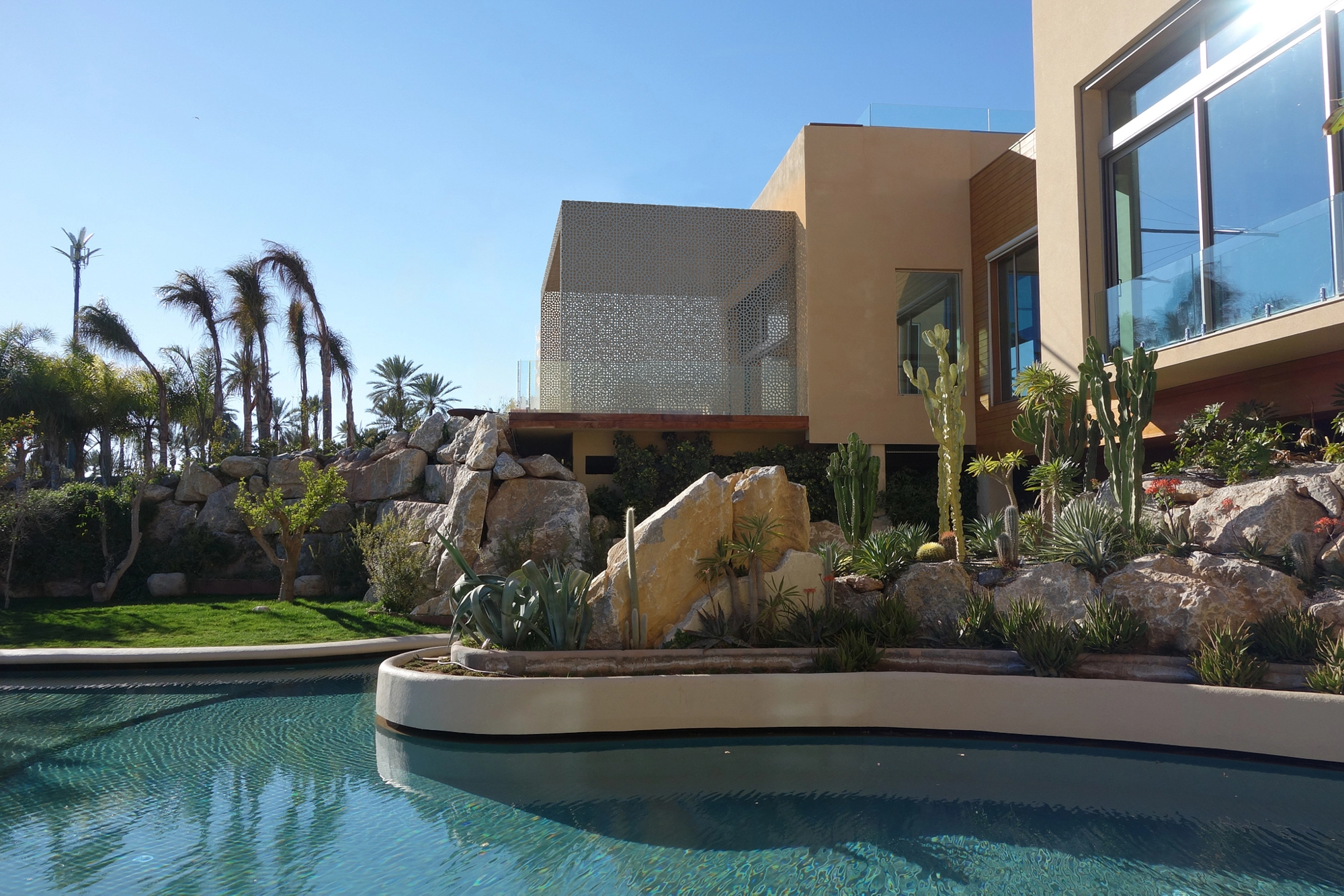
Created for a private estate in Marrakech, this monumental pergola was conceived as a fully integrated architectural extension of the villa’s principal living spaces. Measuring approximately twelve metres in length, eight metres in height, and eight metres in depth, the structure transforms the terrace into a sheltered indoor-outdoor environment overlooking panoramic views of the Atlas Mountains and the surrounding gardens. Conceived to function as both architecture and instrument of light, the pergola filters sunlight throughout the day while creating a protected space in which the client can experience the landscape in constant dialogue with shifting patterns of shadow and projection.
The structure was fabricated entirely by hand using 20 x 20 millimetre steel tubing individually cut, tapered, assembled, welded, and meticulously finished into a repeating geometric composition. Rather than functioning as decorative panels inserted within a visible structural frame, the geometric motif itself forms the structure in its entirety. The pattern rises seamlessly from the vertical sides, continues uninterrupted across the roof, and descends along the opposing elevations without visible divisions, framing elements, or supporting beams interrupting the continuity of the composition. Achieving this required an exceptionally complex level of engineering and structural precision in order to maintain both the apparent lightness of the structure and its architectural stability across such a large span.
Despite its scale and technical complexity, the pergola retains an extraordinary sense of transparency, delicacy, and visual lightness. The openwork geometric structure filters sunlight across the terrace throughout the day, projecting evolving patterns onto the floors and surrounding surfaces while simultaneously protecting the space from direct heat and glare. The unobstructed frontal opening preserves uninterrupted views towards the mountains, while the filtered side elevations create layered visual relationships with the gardens beyond. Conceived as both functional architecture and sculptural intervention, the work exemplifies Yahya’s approach to integrating structure, ornament, engineering, and light into immersive architectural environments where material and atmosphere become inseparable.


_HD.webp)

_HD.webp)

Photography Credit: Warren Wesley Patterson
Pergola
Marrakech, Morocco (2014)
Created for a private estate in Marrakech, this monumental pergola was conceived as a fully integrated architectural extension of the villa’s principal living spaces. Measuring approximately twelve metres in length, eight metres in height, and eight metres in depth, the structure transforms the terrace into a sheltered indoor-outdoor environment overlooking panoramic views of the Atlas Mountains and the surrounding gardens. Conceived to function as both architecture and instrument of light, the pergola filters sunlight throughout the day while creating a protected space in which the client can experience the landscape in constant dialogue with shifting patterns of shadow and projection.
The structure was fabricated entirely by hand using 20 x 20 millimetre steel tubing individually cut, tapered, assembled, welded, and meticulously finished into a repeating geometric composition. Rather than functioning as decorative panels inserted within a visible structural frame, the geometric motif itself forms the structure in its entirety. The pattern rises seamlessly from the vertical sides, continues uninterrupted across the roof, and descends along the opposing elevations without visible divisions, framing elements, or supporting beams interrupting the continuity of the composition. Achieving this required an exceptionally complex level of engineering and structural precision in order to maintain both the apparent lightness of the structure and its architectural stability across such a large span.
Despite its scale and technical complexity, the pergola retains an extraordinary sense of transparency, delicacy, and visual lightness. The openwork geometric structure filters sunlight across the terrace throughout the day, projecting evolving patterns onto the floors and surrounding surfaces while simultaneously protecting the space from direct heat and glare. The unobstructed frontal opening preserves uninterrupted views towards the mountains, while the filtered side elevations create layered visual relationships with the gardens beyond. Conceived as both functional architecture and sculptural intervention, the work exemplifies Yahya’s approach to integrating structure, ornament, engineering, and light into immersive architectural environments where material and atmosphere become inseparable.