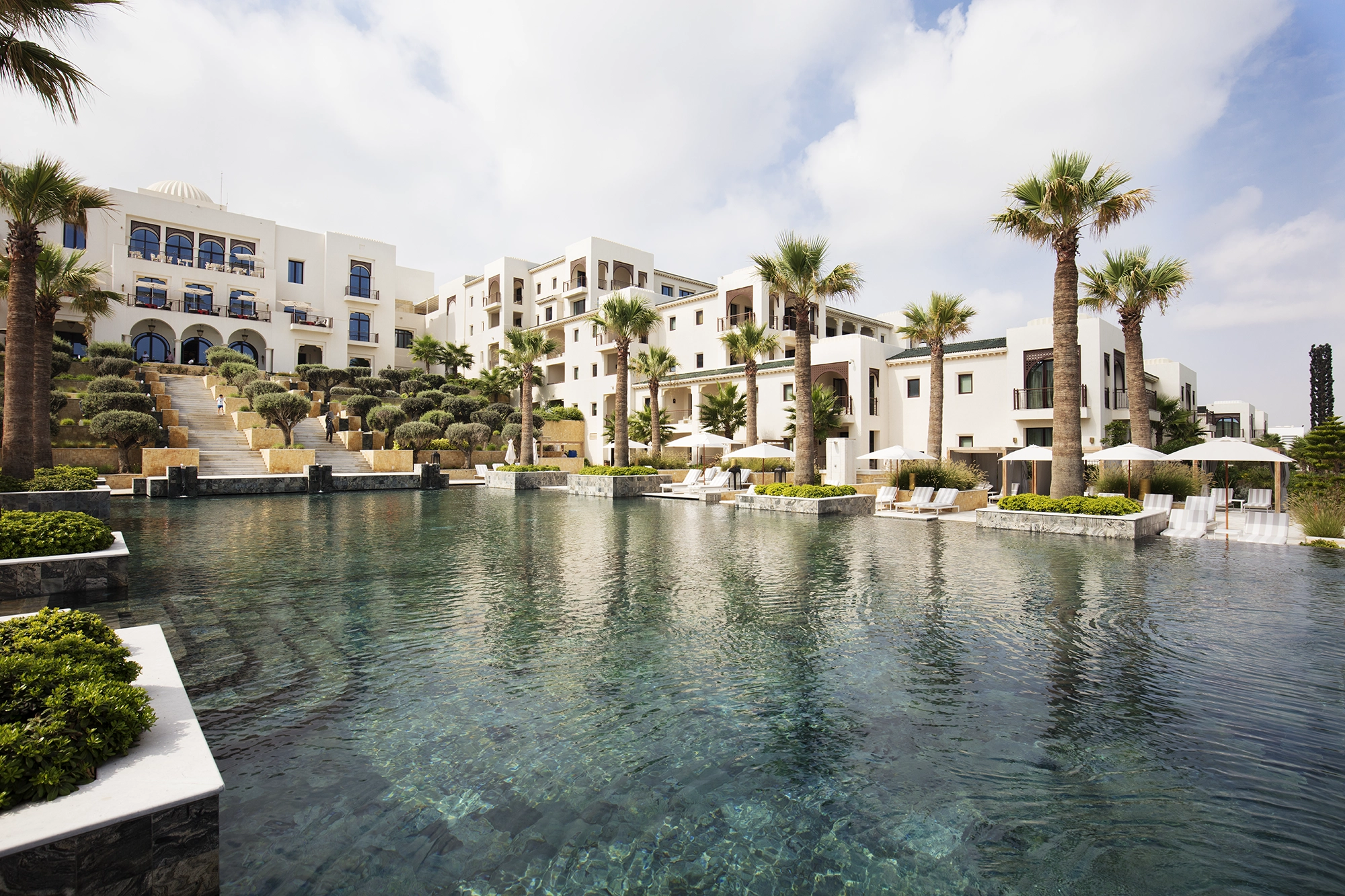


Four Seasons
Tunis, Tunisia ( 2018 )
Located on the shores of Gammarth, the Four Seasons Hotel Tunis commissioned Yahya to create a monumental sculptural installation beneath the grand domed entrance lobby. Conceived as the focal point of arrival, the work establishes the atmosphere of the hotel through light, form, and shadow, marking the transition from exterior to interior with a powerful and meditative presence.
Set along the Mediterranean coastline in one of Tunis’s most exclusive districts, the Four Seasons Tunis was conceived as a place of calm refinement and understated grandeur. As part of this vision, Yahya was invited to design a singular sculptural centrepiece positioned beneath the main entrance dome, a work intended to define the moment of arrival and give architectural identity to the lobby itself.
The sculpture takes the form of a brass lotus, standing alone at the heart of a square, central space. Illuminated from within while entirely concealing its light source, the piece animates its surroundings through intricate projections cast across the marble floor and surrounding surfaces. Light becomes tactile and atmospheric, transforming the entrance into a contemplative space where shadow, reflection, and geometry establish a sense of quiet reverence from the first step inside.
To accompany this central installation, Yahya also designed a series of sculptural torches and architectural lighting elements framing the entrance and surrounding seating areas. Wall-mounted cylinders and exterior pieces were developed to ensure a coherent flow between interior and exterior spaces. Each element was handcrafted at the atelier, conceived not as decorative lighting but as integral architectural components. Together, these interventions create an arrival sequence that is both monumental and intimate, embodying the balance between elegance, serenity, and sensory depth.


Photography Credit: Dan Kullberg
Four Seasons
Tunis, Tunisia ( 2018 )
Located on the shores of Gammarth, the Four Seasons Hotel Tunis commissioned Yahya to create a monumental sculptural installation beneath the grand domed entrance lobby. Conceived as the focal point of arrival, the work establishes the atmosphere of the hotel through light, form, and shadow, marking the transition from exterior to interior with a powerful and meditative presence.
Set along the Mediterranean coastline in one of Tunis’s most exclusive districts, the Four Seasons Tunis was conceived as a place of calm refinement and understated grandeur. As part of this vision, Yahya was invited to design a singular sculptural centrepiece positioned beneath the main entrance dome, a work intended to define the moment of arrival and give architectural identity to the lobby itself.
The sculpture takes the form of a brass lotus, standing alone at the heart of a square, central space. Illuminated from within while entirely concealing its light source, the piece animates its surroundings through intricate projections cast across the marble floor and surrounding surfaces. Light becomes tactile and atmospheric, transforming the entrance into a contemplative space where shadow, reflection, and geometry establish a sense of quiet reverence from the first step inside.
To accompany this central installation, Yahya also designed a series of sculptural torches and architectural lighting elements framing the entrance and surrounding seating areas. Wall-mounted cylinders and exterior pieces were developed to ensure a coherent flow between interior and exterior spaces. Each element was handcrafted at the atelier, conceived not as decorative lighting but as integral architectural components. Together, these interventions create an arrival sequence that is both monumental and intimate, embodying the balance between elegance, serenity, and sensory depth.